
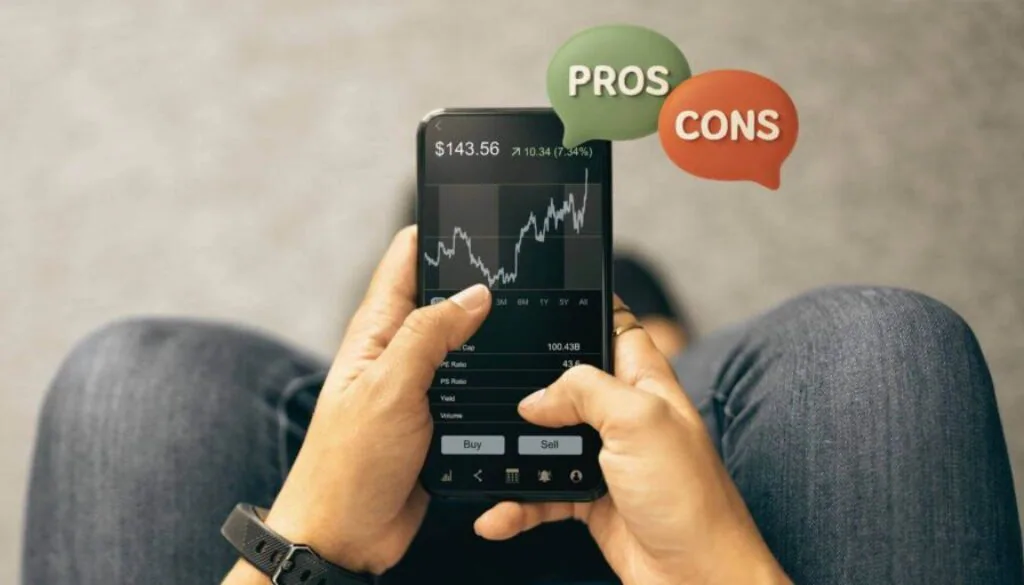
Trading Apps: Pros and Cons
People interact with the stock market differently now that there are trading apps. In the past, you had to call a traditional broker, use a desktop computer, and pay fees for each trade you made.
The process looks completely different now. Anyone with a smartphone and a trading app can open an account and trade by themselves. Because of this change, a lot more regular people are getting into the markets, and many of them start with small amounts of money.
This overview breaks down the key advantages and disadvantages of trading apps from a factual standpoint, offering insight into the features that attract users as well as the concerns that often accompany rapid, app-based trading.
Advantages of Trading Apps
1. Easy Access for First-Time Users
Trading apps are designed to be approachable. Straightforward layouts, simple navigation, and minimal setup steps make them accessible to people who may be new to investing. Instead of working through traditional brokerage processes, users can explore the market with just a few taps.
2. Trading with no fees
Many trading apps no longer charge the usual fees for buying or selling stocks. Users can make smaller or more frequent trades without worrying about extra fees because there are no commissions.
3. Access to Fractional Shares
Fractional shares allow users to purchase a portion of a stock rather than paying for a full share at once. This makes stocks with higher prices more accessible to those who prefer investing smaller amounts at a time.
4. Real-Time Market Tools
Trading apps deliver live market data, fast order execution, breaking news, and up-to-the-minute price information. This real-time access fits naturally into how people use smartphones to stay updated throughout the day.
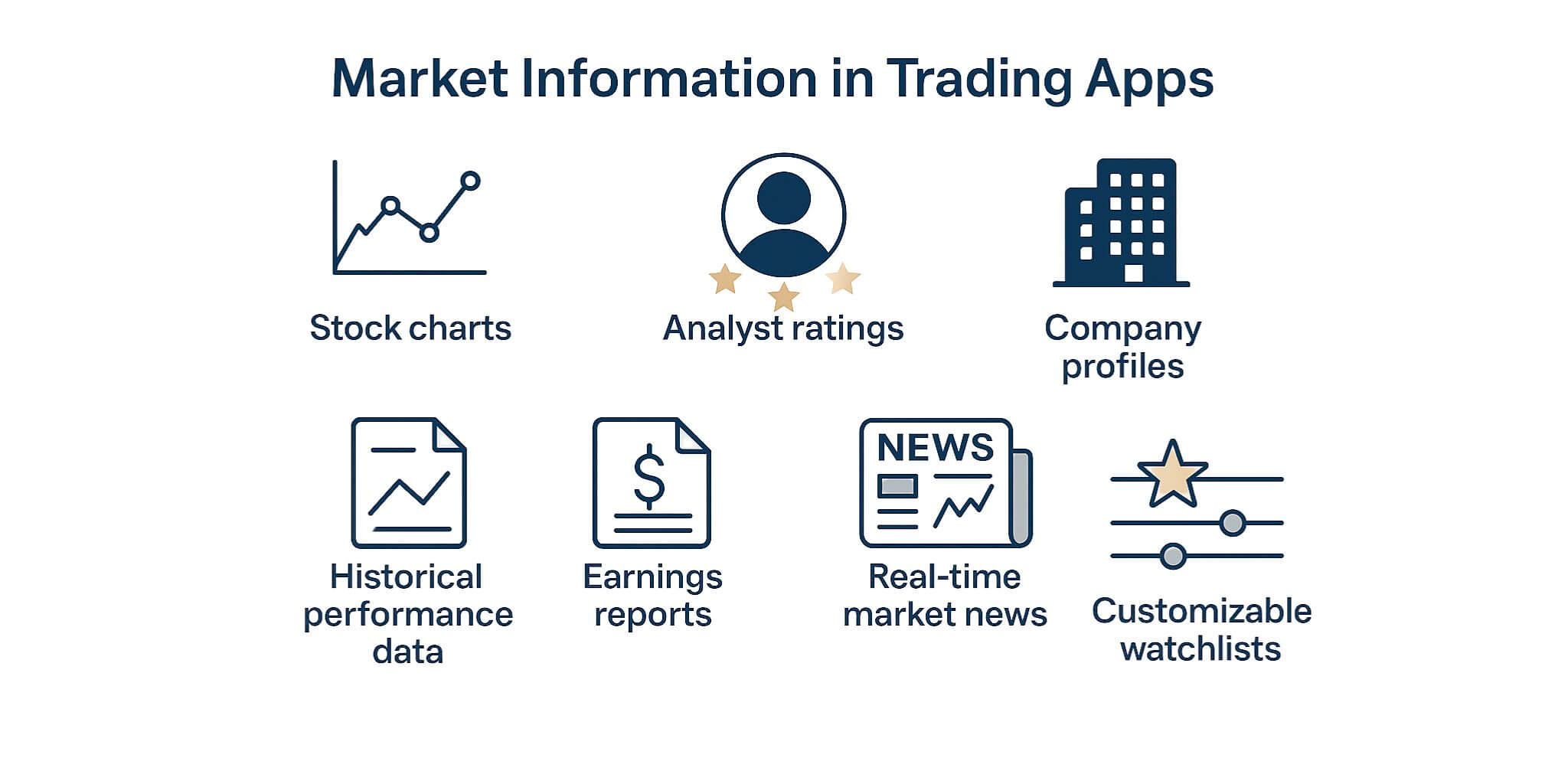
5. Consolidated Market Information
By collecting everything in one spot, trading apps make it easier for users to look through different types of market information. Many platforms pull in a wide range of data, such as:
Disadvantages of Trading Apps
1. More likely to overtrade
Because trading apps make it so easy to place trades, some users end up reacting to every price movement or notification. Instant execution, real-time alerts, and constant market access can shift attention away from long-term strategy and toward short bursts of activity.
This behavior lines up with what behavioral economists have observed for decades: people often trade based on emotion rather than logic. Themes discussed in 10 Smart Money Tips to Stop Losing in the Markets — like chasing returns, overreacting to market moves, or checking an account too often — are the same patterns that can be amplified by a fast-moving trading app.
2. The layout of an app can affect decisions
Certain design elements—bright colors, notifications, animations, or prompts—can subtly encourage more activity. While these are meant to make apps intuitive, they can also nudge users toward making quick, emotional decisions.
This is a classic example of how cognitive biases show up in financial behavior. As explored in Behavioral Finance: The Human Side of Investment, factors like overconfidence, herd mentality, and loss aversion can be triggered by even small design choices. When the environment encourages action, people often act.
3. Simple Interface, Complicated Markets
The markets that these apps link to include complex tools like options trading, margin accounts, and technical indicators, despite their superficial simplicity. Complex decisions are still being made despite the interface’s sleek design.
4. Technical Issues During High-Volume Trading
Trading apps can experience slowdowns or outages during periods of heavy market activity. When many users attempt to trade at the same time, delays or temporary disruptions may occur, affecting when trades are executed.
5. The market structure isn’t very clear
You can get performance data, news, and charts from trading apps, but they won’t reveal the market’s inner workings or how traders interact with each other. When traders can’t see the bigger picture of the market where their transactions are taking place, concerns about fairness and transparency occur.
Final Thoughts
The trading apps that are available today are user-friendly, make trading a breeze, and offer real-time tools that complement the way people use their phones nowadays. However, issues like trading too quickly, failing to grasp risk, and failing to perceive the true nature of the market can arise as a result of their simplicity and quickness.
If you want to know how trading apps influence people’s behavior and where concerns about modern trading culture typically originate, you should familiarize yourself with both sides of these platforms.