Is the U.S. Dollar Losing Value by Design?
Why the Value of the Dollar Matters More Than Its Symbol
When people talk about the U.S. dollar, the conversation often focuses on exchange rates or market headlines. But the real issue for households isn’t how the dollar trades on a chart—it’s how far that dollar goes in everyday life.
Over long periods of time, the U.S. dollar has lost a significant amount of its purchasing power. This isn’t a sudden collapse, and it isn’t theoretical. It shows up in grocery bills, housing costs, insurance premiums, and education expenses. Understanding why the dollar loses value—and whether that process is intentional—requires historical context rather than speculation.
A Brief Look Back: 1971 and the End of the Gold Standard
A key turning point for the U.S. dollar occurred in 1971, when the United States ended the gold standard. Prior to that, the dollar was tied—directly or indirectly—to gold, which limited how much the currency supply could expand.
Once that constraint was removed, the dollar became a pure fiat currency, meaning its value was no longer backed by a physical asset but instead by government policy, economic output, and confidence.
Since that shift:
- The purchasing power of the dollar has declined steadily
- Inflation has become a permanent feature of the economic system
- Currency value has increasingly been influenced by policy decisions
This long-term erosion of value is a major reason inflation now functions as a hidden tax, a concept explored in How Inflation Quietly Taxes Your Money.
Dollar Devaluation vs. Economic Strength
It’s important to separate two ideas that are often confused:
- A strong economy
- A strong currency
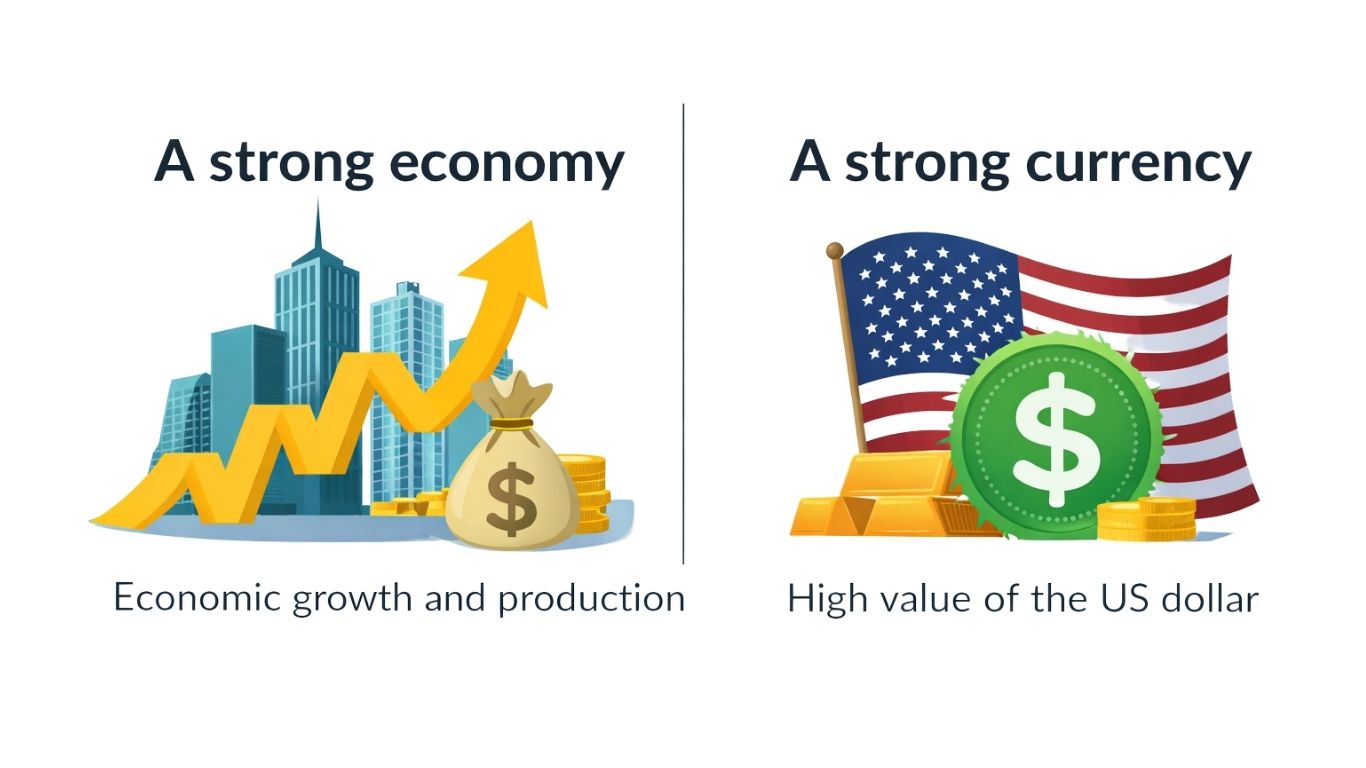
A country can experience economic growth while its currency weakens. In fact, some policymakers argue that a weaker dollar can make exports more competitive internationally by making U.S. goods cheaper for foreign buyers.
While this can benefit certain sectors—particularly large multinational companies—it can also raise the cost of imports. Since the United States imports a significant amount of finished goods and raw materials, a weaker dollar often leads to higher prices at home.
This dynamic helps explain why GDP reports can look positive even as households feel financial pressure.
Why a Weaker Dollar Feels Like Inflation at Home
When the dollar weakens:
- Imported goods become more expensive
- Input costs for construction and manufacturing rise
- Price increases work their way through the supply chain
For consumers, the result is familiar: everyday expenses increase even when wages don’t keep pace. This is one reason inflation doesn’t need to “spike” to cause harm—it only needs to persist.
The compounding nature of inflation and currency devaluation is explored further in Why Cash Loses Value During Inflation, which explains how even modest inflation steadily erodes purchasing power.
Who Benefits—and Who Doesn’t
Currency devaluation does not affect everyone equally.
Those who own assets—such as businesses, real estate, or productive investments—often see values rise over time, partly because assets tend to adjust with inflation. In contrast, people who rely primarily on wages or cash savings feel the pressure first.
This growing divide between asset owners and wage earners contributes to what many describe as a bifurcated economy: one where financial outcomes increasingly depend on ownership rather than income alone.
This theme ties directly into the broader framework laid out in the blog, How Inflation Quietly Taxes Your Money, which connects inflation, cash, and purchasing power into one long-term narrative.
Is Dollar Devaluation “Intentional”?
Rather than asking whether the dollar is being “intentionally crushed,” a more accurate question is this: Are policy decisions being made with the understanding that the value of the currency will go down over time?
Historically, governments facing high debt levels benefit from inflation because debts are repaid with dollars that are worth less in real terms. While the numbers stay the same, the purchasing power behind those dollars declines.
This doesn’t require a conspiracy. It only requires incentives.
Why This Matters to Everyday Households
For households, the consequences of a weakening dollar are tangible:
- Savings buy less over time
- Wages lag behind rising costs
- Long-term planning becomes more difficult
This is why understanding inflation, currency value, and purchasing power is no longer optional. It’s a core part of financial literacy in a fiat-currency system.
Key Takeaway
The U.S. dollar hasn’t collapsed—but it has lost substantial purchasing power over time. That drop didn’t happen all at once, and it wasn’t by chance. It shows years of decisions about monetary policy, trade-offs in the economy, and rising inflation.
This context helps us understand why inflation seems to never stop, why cash can’t keep up, and why it’s more important than ever to stay informed.