
Why Import Prices Rise First When the Dollar Weakens
Why the Value of Money Matters for Prices in Daily Life
When the U.S. dollar loses value compared to other currencies, the effects spread quickly throughout the economy. The cost of imported goods is one of the first places the effect shows up.
Because the United States imports a lot of consumer goods, raw materials, and industrial inputs, even small changes in the value of the dollar can lead to big changes in prices.
This often shows up in households as higher prices for everyday things, like electronics and building materials, long before the bigger economic data shows it.
How Currency Exchange Directly Affects Import Prices
Currency exchange makes international trade possible. When American businesses buy things from foreign suppliers, they often pay in the currency of the supplier.
If the dollar goes down, American buyers need more dollars to buy the same goods from other countries.
For example:
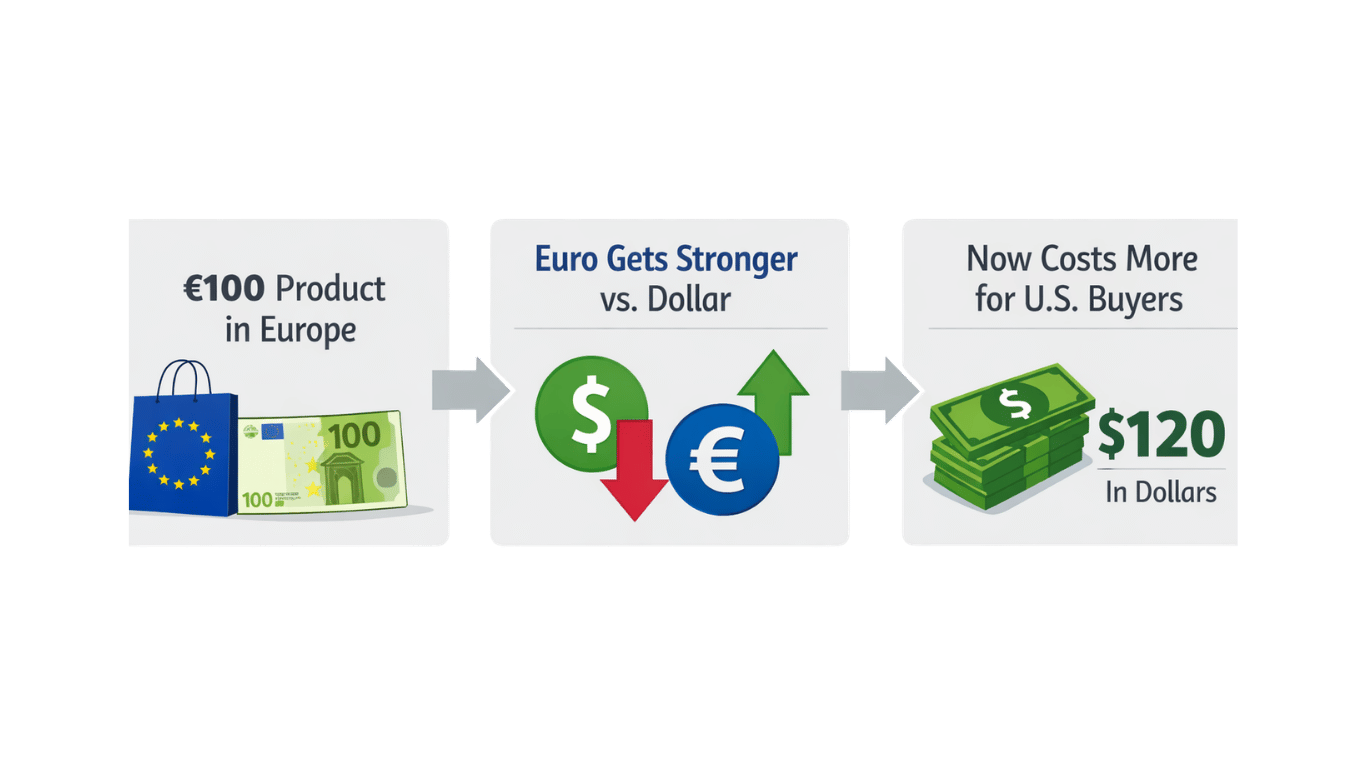
Nothing about the product changed. The value of the currency did.
This is one reason why inflation can rise even when supply and demand don’t change much.
Why Input Costs Rise Before Retail Prices
The effects of currency changes often appear first in business input costs, not retail shelves.
Many industries depend on imported materials, including:
- Energy components
- Industrial metals
- Building materials
- Electronics parts
- Manufacturing equipment
When these inputs become more expensive, businesses face a choice:
- Absorb the higher costs
- Reduce margins
- Raise prices
Over time, higher input costs usually work their way through supply chains and eventually reach consumers.
This gradual process helps explain why inflation sometimes feels persistent even when the initial cause occurred months earlier.
Why Construction and Housing Costs Are Especially Sensitive
Some industries are very sensitive to the prices of imports. Housing and construction are two of them.
Many things that go into building houses depend on global supply chains, such as:
- Lumber products
- Steel and aluminum
- Tile and fixtures
- Appliances
- Electrical components
When the value of a currency changes, the cost of building homes can go up quickly because it costs more to bring in goods.
This makes housing prices, renovation costs, and development costs go up.
Why Businesses Often Pass Costs Along
Businesses don’t usually keep paying higher costs for a long time. When import costs go up because of currency changes, businesses often raise prices to keep their margins.
This can happen slowly through:
- Higher retail prices
- Reduced discounts
- Smaller product sizes
- Changes to service fees
People might not know right away what caused it, but the result is the same: higher costs of living.
These price increases act like a secret tax on purchasing power, as explained in How Inflation Quietly Taxes Your Money.
Why Consumers Often Feel It Before Economists Measure It
It takes time for economic indicators like the CPI and GDP to be reported, and they are often changed later. But consumers see price changes in real time.
They see it:
- At grocery stores
- When purchasing appliances
- When repairing homes
- When paying utility bills
This is why people often have different opinions about the economy than what the government says.
People don’t respond to statistical averages; they respond to what they know.
How Import Prices Connect to the Bigger Picture
Import costs are just one link in a broader economic chain.
When the dollar weakens:
- Export competitiveness may improve
- Corporate earnings can rise
- GDP growth can appear strong
At the same time:
- Import costs increase
- Consumer prices rise
- Purchasing power declines
This is part of the bigger picture that is discussed in “Why GDP Can Rise While Consumers Feel Worse“: economic indicators can look good even when people’s budgets are getting tighter.
Key Takeaway
Many people don’t realize how quickly currency changes affect prices. When the dollar goes down, the prices of imported goods and materials often go up first. Those higher costs move through supply chains and eventually get to customers. Learning how the value of a currency affects imports can help us understand why inflation can continue even when the news about the economy is good.
For families, the effect is clear: when the dollar buys less around the world, it often buys less at home too.