
Why America’s Growing Debt Should Concern You
America’s Debt Problem Is No Longer a Distant Issue
For years, rising U.S. debt was often seen as a long-term political debate, not an immediate economic concern. But with debt levels still climbing, the talk is getting louder. According to the U.S. Treasury, total federal debt has surpassed $30 trillion and continues to grow. At the same time, economic growth has remained far more moderate by comparison.
This matters because debt becomes much harder to manage when it grows faster than the economy that supports it.
What National Debt Really Means
The national debt is the money the federal government owes after borrowing to cover spending in excess of tax revenues.
Governments issue Treasury securities to finance:
- Federal programs
- Infrastructure
- Military expenditures
- Interest obligations
- Budget deficits
Debt is not dangerous in itself. Most economies have debt to some degree. The concern is when borrowing speeds up faster than economic output and revenue generation.
Why Growing Debt Matters
When interest costs begin to occupy larger shares of government spending, debt becomes more critical.
According to the Congressional Budget Office (CBO), rising debt levels are expected to increase federal interest expenses significantly over time.
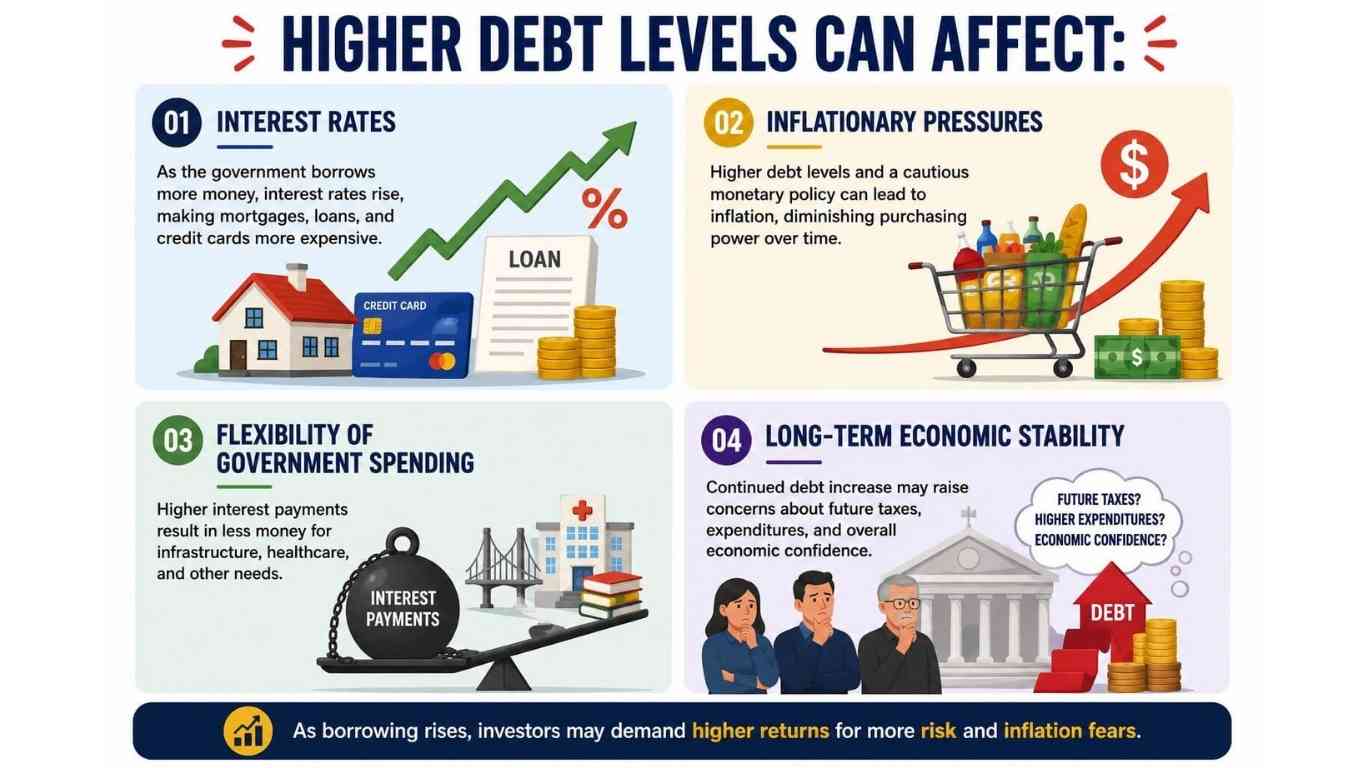
Higher debt levels can affect:
- Interest rates
- Inflationary Pressures
- Flexibility of government spending
- Long-term economic stability
How Debt and Inflation Are Closely Related
One of the most important relationships in economics is the relationship between debt and inflation.
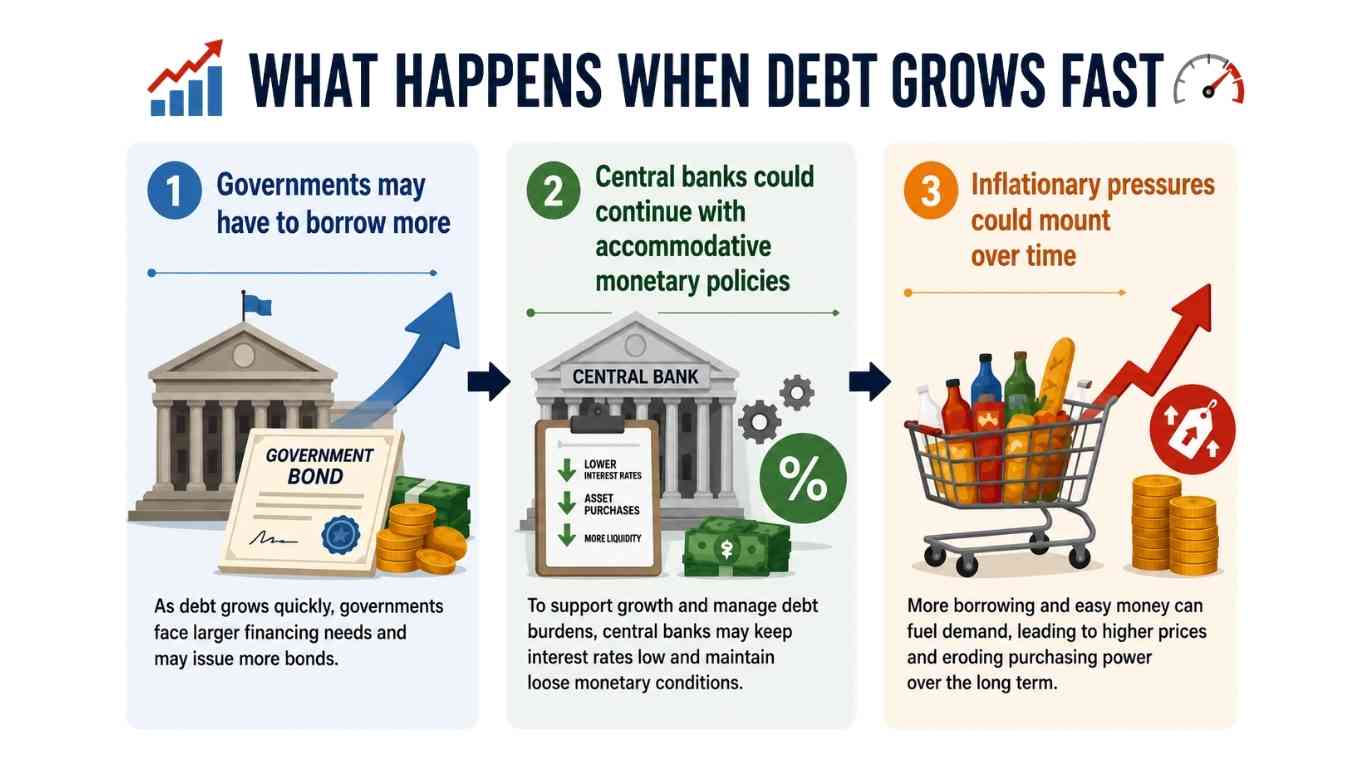
Inflation lowers the real value of money which indirectly lowers the real burden of debt.
This ties directly into what was discussed in Why Inflation Quietly Destroys Your Purchasing Power: inflation gradually changes the value of money over long periods.
In practical terms, inflation can make debt easier to repay in nominal dollars—but harder on households whose purchasing power declines.
Why Do Interest Rates Matter More?
Interest rates matter more and more as debt levels increase.
The amount of government debt is so huge that even modest rate hikes can have a dramatic impact on the cost of borrowing.
For example:
- More interest on trillions of dollars of debt
- Creates much larger interest payments
- Which may require additional borrowing
This can create a cycle where debt growth itself is helping to push costs higher.
Higher interest rates also impact households directly through:
- Mortgages
- Credit cards
- Car loans
- Business financing
How Debt Affects Everyday Americans
National debt may sound abstract, but the effects eventually work through the broader economy. Over time, rising debt levels can increase inflation, raise borrowing costs, reduce purchasing power, and create greater economic uncertainty.
These forces influence everyday financial decisions, even if indirectly. This links to the broader themes discussed in:
Both inflation and debt determine the environment in which savings, wages and investments operate.
Why Economic Growth Alone Isn’t Enough
One common argument is that strong economic growth can offset debt concerns.
Growth sure helps. But when debt grows faster than GDP over long periods of time, sustainability becomes harder.
According to data from the Federal Reserve Economic Data (FRED) database, federal debt relative to GDP has risen substantially over time.
This does not necessarily mean crisis right away, but it does mean growing long-term pressure on fiscal policy and economic management.
Why We’re Having This Conversation More and More
Debt worries are no longer the exclusive domain of economists or policymakers. Rising deficits, inflation pressure, and higher interest rates have pushed debt to the forefront of financial discussions.
People are beginning to see the larger economic trends related to:
- Cost of living rising
- Interest Rates
- Long-term financial planning
The problem is not merely one of government budgets but of how economic policy eventually impacts households.
The Bottom Line
Debt is not uncommon. But when debt outpaces the economy for extended periods of time, it can cause long-term problems that get increasingly difficult to overlook. Higher debt levels can have long-term effects on inflation, interest rates, and the value of money.
These relationships helped to understand why national debt is important—not just at the government level, but also in everyday financial life.